A Simpler Way to Think About "Neurodiversity"
Neurodiversity is often introduced through lists of diagnoses, categories, or labels. While those labels can be meaningful and even empowering for individuals, they are not the most helpful starting point for leaders, educators, businesses, or organizations trying to design better environments.
...the focus shifts from managing differences to building home, school, and workplace environments where people can thrive.
Many people are proud to share a diagnosis, and that matters. A diagnosis can offer language, validation, and a sense of belonging. It can help someone understand themselves more clearly and advocate for what they need. But a diagnosis is not the end of the conversation. It is a way of pointing toward how a person functions, not a definition of who they are or what they can contribute.
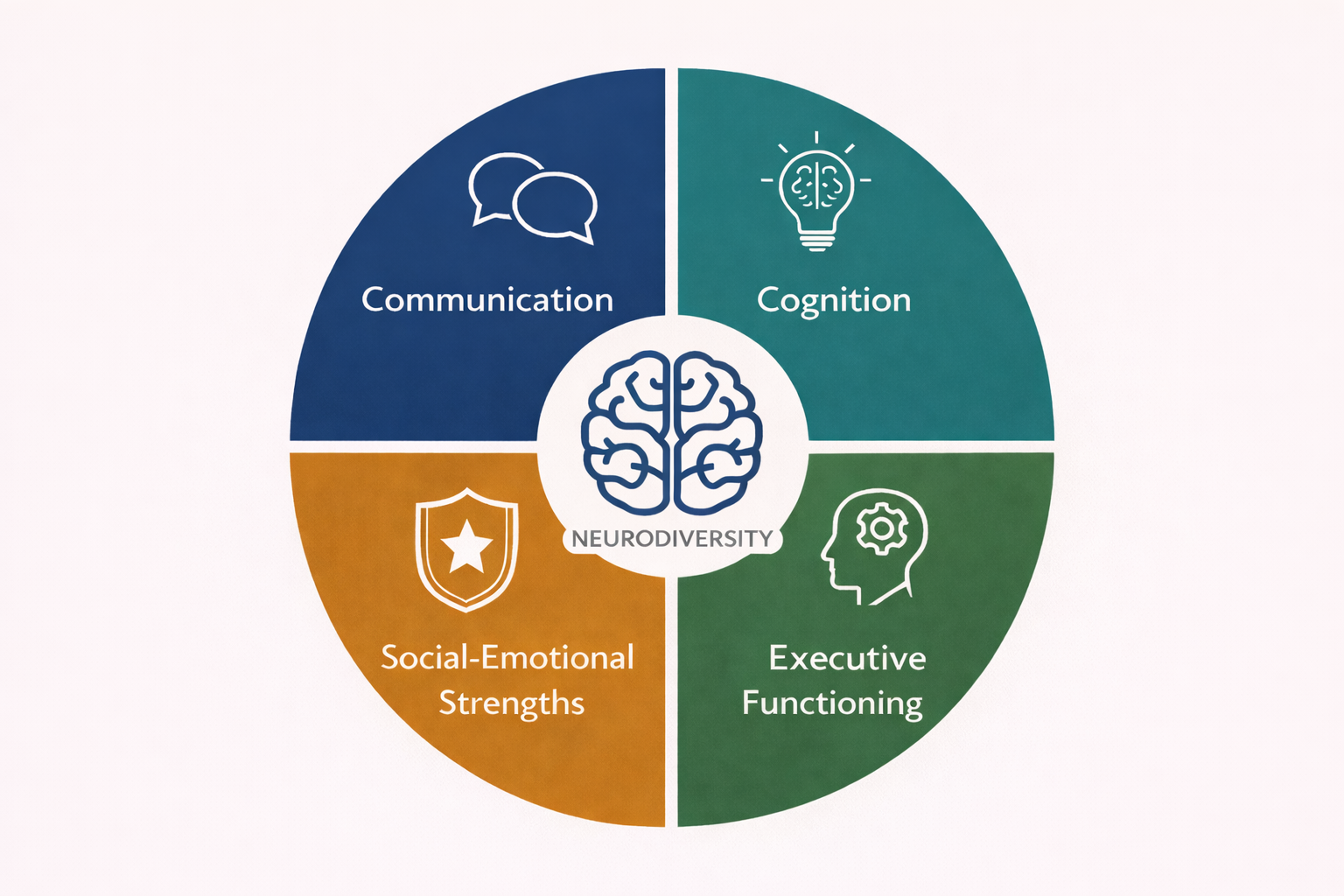
A more practical way to understand neurodiversity is to think in terms of skills and differences that exist across humanity. In real life, neurodiversity shows up most clearly across four core areas: communication, cognition, executive functioning, and social-emotional strengths.
Communication refers to how people express ideas, interpret information, and engage in dialogue.
Cognition describes how people process information, recognize patterns, and make sense of complexity.
Executive functioning involves planning, prioritizing, starting tasks, managing time, and sustaining attention.
Social-emotional strengths shape how people relate to others, regulate emotions, and build trust over time.
Everyone has a unique profile across these four areas. Some people have pronounced strengths in one domain and need more support in another. Others function differently depending on context, stress, clarity of expectations, or the environment they are in. These differences are not unusual; they are uniquely human.
When someone shares a diagnosis, it often highlights patterns within one or more of these areas. It gives insight into how that person learns, works, or relates. What often matters most is not the label itself, but what it helps us understand about how to design communication, expectations, support, and collaboration more effectively.
Neurodiversity is really just about how people function. When we make expectations clear and systems easier to navigate, more people can do good work. Instead of managing labels or diagnoses, we design homes, schools, and workplaces that help people use their strengths and show up well.