Leading Learners, Not Labels

The four skills to master for effective learning
Educators today are navigating classrooms with an unprecedented range of learner needs. Public, private, and faith-based schools alike are asking the same question: how do we teach everyone well without fragmenting instruction or reducing students to categories?
The instinct is often to look to labels for answers. Disability categories, diagnoses, and eligibility terms can feel like necessary starting points. They help systems organize services and comply with requirements. But in daily classroom practice, they rarely provide clear guidance for instruction.
Teachers do not teach labels. They teach students.
When instruction becomes overly label-driven, educators are left managing complexity rather than designing learning. Students, in turn, experience support as something separate from instruction rather than embedded within it.
A more effective approach begins by organizing teaching around how learning actually shows up in classrooms.
Four Areas That Shape Learning for Every Student
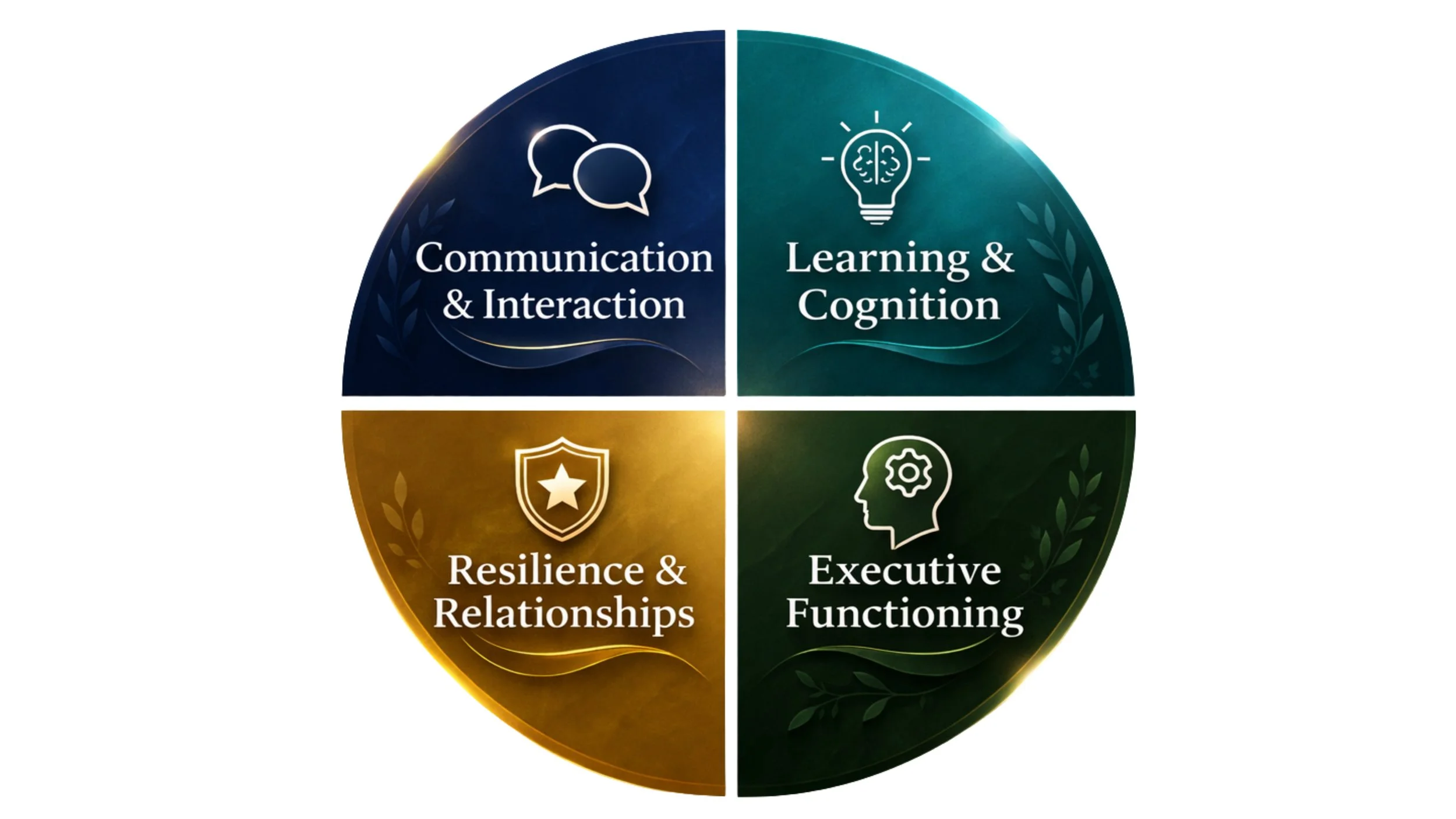
Across classrooms and grade levels, learner needs consistently surface in four interconnected areas. These areas are present in all students, not just those with identified disabilities. When teachers design with these in mind, instruction becomes more accessible, more predictable, and more effective.
Communication and Interaction shape how students receive information, express understanding, and engage with peers and adults. Clear language, visual supports, modeled expectations, and structured opportunities for participation reduce confusion and increase engagement for all learners.
Learning and Cognition influence how students process information, make connections, and apply knowledge. Thoughtful scaffolding, intentional task design, and attention to cognitive load allow students to build understanding without unnecessary barriers.
Resilience and Relationships affect how students experience challenge, feedback, and persistence. Strong classroom dynamics, consistent routines, and predictable responses to mistakes support students in staying engaged even when learning becomes difficult.
Executive Functioning governs planning, organization, task initiation, and self-monitoring. When classrooms externalize these demands through structure and clear routines, students are better able to focus on learning rather than navigating hidden expectations.
These four areas provide a practical lens for instruction. They allow teachers to anticipate needs rather than react to them, and they create coherence across classrooms without requiring individualized plans for every student.
Why This Approach Works Across Settings
This framework holds whether a school is navigating compliance requirements, tuition-based expectations, or mission-driven values. It does not replace specialized services when they are needed, but it strengthens general instruction so those services can be more effective.
Designing classrooms around communication, cognition, resilience, and executive functioning reduces fragmentation. It supports inclusion through intentional design rather than accommodation after the fact. It also restores professional confidence to teachers by giving them a clear, shared language for instructional decision-making.
Leading learners well requires seeing patterns, not categories. It requires designing environments where students can access learning without first being defined by a label.
When instruction is grounded in how learning functions, classrooms become more stable, expectations become clearer, and students are better positioned to grow.
That is what it means to lead learners, not labels.