Four Questions Every School Must Answer Immediately
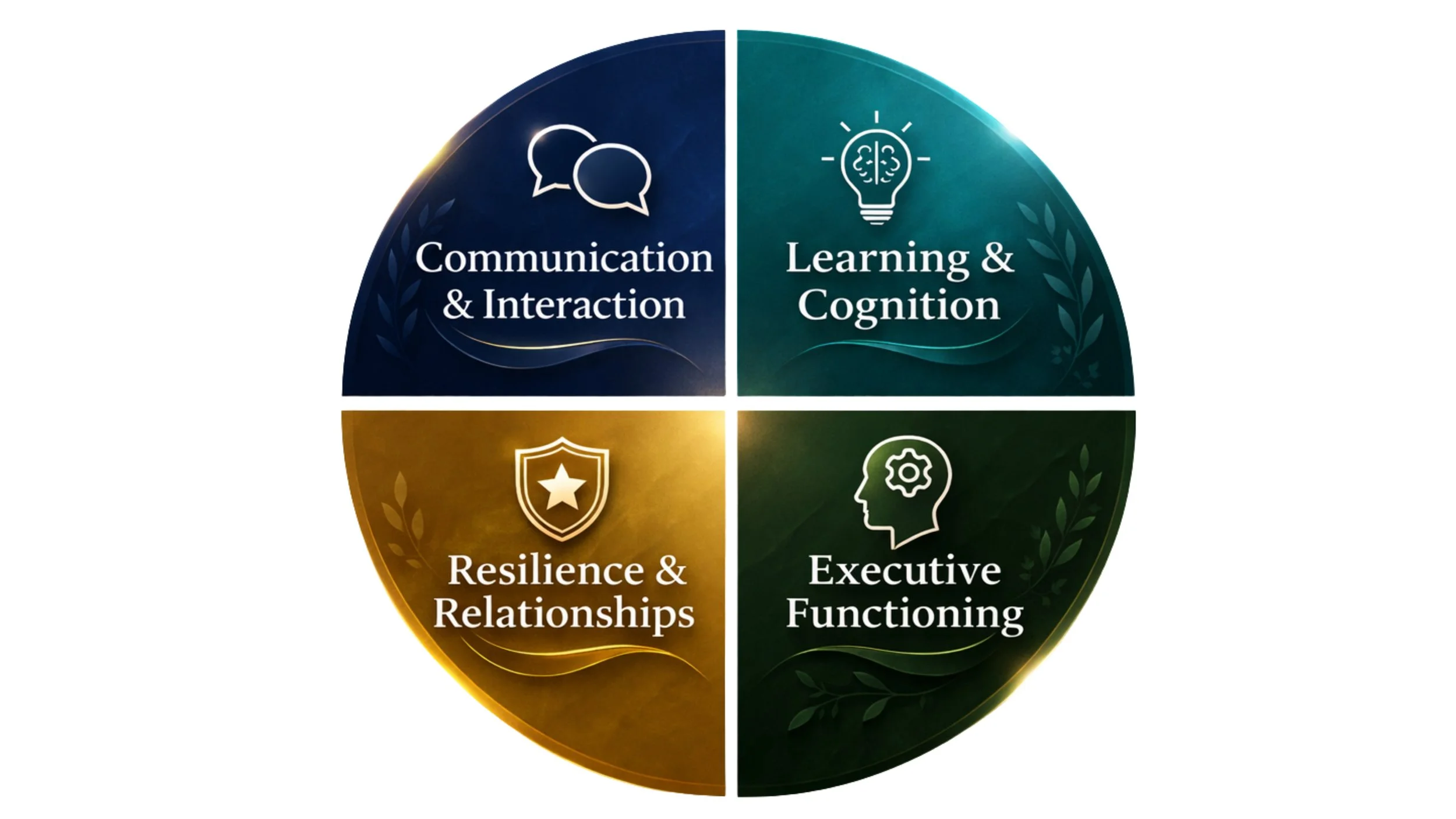
Schools today are being asked to teach students with the widest range of learning profiles we’ve ever seen. The only way we can do this well is if we have a clear framework guiding instruction — not just good intentions.
In one classroom, you may have a gifted learner finishing early, a student with dyslexia working twice as hard, a student managing anxiety, a multilingual learner, and a student with ADHD who understands everything but struggles to start.
This is not unusual anymore. It is normal. The question is whether our instructional design is built for it.
If you want to know whether your school is truly supporting every learner, start by asking these four sets of questions.
1. Communication That Creates Clarity
(Communication & Interaction)
Some classrooms feel focused and calm. Others feel ambiguous and reactive.
Clarity is rarely accidental.
Ask yourself:
What do we consistently do that makes expectations unmistakably clear?
What communication routines reduce confusion and increase focus?
What language or modeling strategies help students move confidently into action?
When students respond quickly and accurately, what did we do beforehand that set them up for success?
Neurodivergent learners do not struggle with high expectations. They struggle with vague ones.
If clarity depends on individual teacher style rather than shared practice, inconsistency becomes the barrier.
2. Reducing Cognitive Friction
(Learning & Cognition)
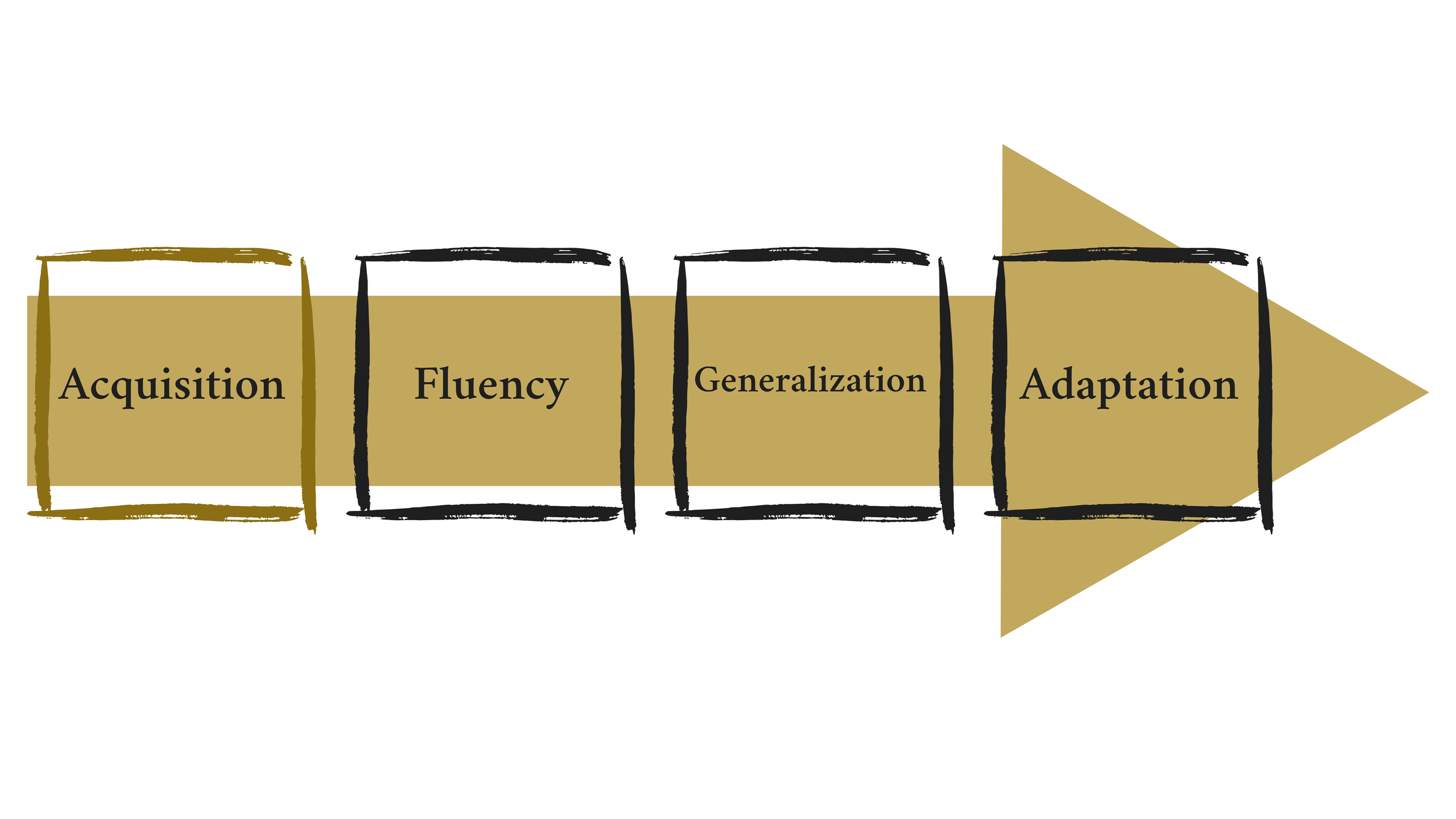
Learning breaks down when we increase complexity before fluency is built.
Ask:
What do we intentionally build into lessons before difficulty increases?
How do we develop fluency before raising expectations?
How do we prepare students to apply learning in new contexts?
How do we help students adapt when conditions change?
Acquisition. Fluency. Generalization. Adaptation.
When these stages are intentional, students with processing differences, language needs, attention variability, or working memory challenges build momentum instead of falling behind.
3. Forming Students for Joy, Pressure, Recovery, & Relationships
(Resilience & Relationships)
Every student will experience frustration. The issue is whether we’ve built predictable recovery pathways.
Ask:
How do we help students delight in learning?
What do we say when a student is overwhelmed or shutting down?
What language do we use to coach recovery after a mistake?
How do we reinforce effort and growth when students succeed?
Resilience is not a poster on a wall.
It is embedded in daily language.
When recovery systems are clear, behavior decreases and independence increases.
4. Execution & Performance Systems
(Executive Functioning)
This is where inclusion becomes visible.
Ask:
What systems help students start without delay?
What routines help students sequence multi-step work successfully?
What tools or structures help students finish strong and turn in quality work?
Where do we see students becoming more independent because of systems we’ve put in place?
Executive functioning is not simply a student trait.
It is an environmental design issue.
Strong systems reduce the need for constant accommodations. Weak systems increase them.
A Final Question for Leaders
Are these strengths consistent across classrooms — or dependent on individual teachers?
If they are inconsistent, students experience a different school every period.
For neurodivergent learners, unpredictability is often the real barrier.
The goal is not perfection.
The goal is coherence.
And coherence is something schools can design.